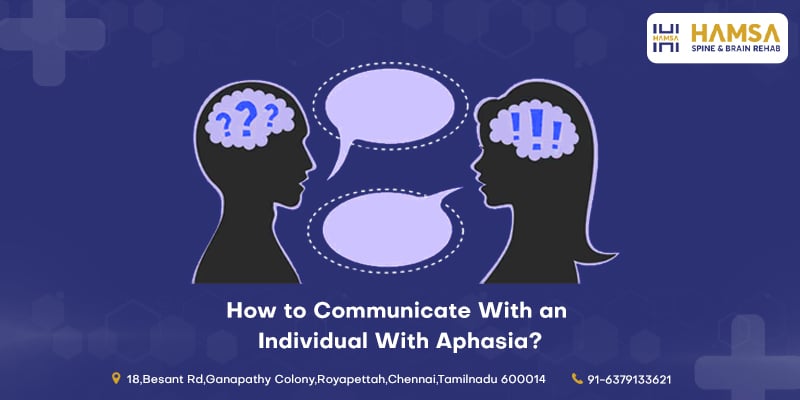
Individuals who survive a stroke may have residual problems in speech, language and communication. This is due to the damage caused in the speech and language areas of the brain. Due to the sustained damage, their access to words/sentences in their brain might be hampered to various levels.
As a result they may have deficits in the following areas:
 their needs using words
- Understanding speech
- Finding words
- Forming sentences
- Reading aloud
- Writing
How can you help?
- Keep it Simple– Speak in short simple sentences
- Be Patient – Give adequate time for the person to respond. Talk with the person, don’t talk for the person
- Remove any distractions – A communicative environment should be free of any barriers like noise, TV in the background, multiple people talking. Make the room as interactive as possible.
- Ask how to help – They know what might help. Use tools like gestures, pictures, e-pads, writing boards to try and help them express in the way he wants to
- Confirm – If they try communicating, repeat back what you understand and confirm with them if that’s what they intended to say
- Be alert– detect any signs of distress, discomfort and try figuring out what caused the event
- Remember that they are the same as before and only have a different way to communicate. Their intelligence is not affected. So don’t treat them differently
- Consent – keep the person informed at all times what you are doing with/ for them, involve the person in different household events and discussions
- Encourage – Keep the person motivated and help boost self-confidence, independence and avoid being over-protective
- Reinforce any attempts to communicate and ignore errors observed.
Also Read: About Aphasia | Communication Disorder After Stroke
Join the APHASIA CLUB : We at Hamsa Spine and Brain Rehabcentre have initiated this to empower individuals with aphasia. The aphasia club will involve various fun activities including movie times, communication groups, care-giver support groups, reading clubs and much more. We will categorise each individual based on their interests and help them communicate better through the process. A leading neuro specialist in Chennaihandles the Aphasia Club activities. Meeting other individuals who face the same issues will give confidence to overcome communication barriers as a team along with imparting a sense of togetherness.